Unclog Your Life – Easy Tips on How to Keep Drains Clean
Why Keeping Your Drains Clean Should Be Your Top Priority
For Denver homeowners, understanding how to keep drains clean is essential. Clogged drains are rarely sudden; they result from months of preventable buildup. The frustration of a slow or completely blocked drain is something every homeowner dreads, but the good news is that most drain problems are preventable.
Quick Answer: How to Keep Drains Clean
- Weekly: Pour hot water down drains to dissolve grease and soap.
- Monthly: Use a baking soda and vinegar treatment for a deep clean.
- Daily: Use drain strainers to catch hair and food particles.
- Never: Pour grease, coffee grounds, or "flushable" wipes down drains.
- Professional: Schedule annual drain inspections to prevent major clogs.
A slow drain is your first warning sign that buildup is starting. A completely clogged drain means you're in emergency mode, where costs can climb quickly. The key is to remember that prevention beats reaction every time. Simple habits can save you from expensive emergency plumber calls.
I'm Mike Martinez, owner of Accountable Home Plumbing. For years, I've helped Denver Metro homeowners master how to keep drains clean through preventive maintenance. My experience shows that homeowners who follow simple routines rarely need our emergency drain services.
Why Clean Drains Matter More Than You Think
A slow drain is more than an annoyance; it's a potential hazard. Knowing how to keep drains clean is about protecting your home and health, not just preventing clogs.
Neglected drains are breeding grounds for bacteria and mold, which can trigger asthma symptoms and create persistent foul odors. The organic buildup also attracts pests like drain flies and mosquitoes, turning your pipes into an invitation for unwanted guests.
The financial risks are even greater. Regular backups can lead to serious structural damage. Water seeping behind walls and under floors causes pipe corrosion, hidden leaks, and even flooding that can compromise your home's foundation. The costly repairs from water damage—including replacing floors, drywall, and mold remediation—far exceed the price of routine maintenance.
Simply put, understanding how to keep drains clean prevents these issues. Regular maintenance protects your family's health, keeps pests at bay, and saves your home from expensive damage.
For a complete approach to protecting your plumbing investment, check out our Plumbing Maintenance Checklist to stay ahead of problems before they become emergencies.
Proactive Prevention: The Best Way to Keep Drains Clean
When it comes to how to keep drains clean, prevention is the winning strategy. It's easier and cheaper to stop clogs before they form. Let's tackle your home's drains, room by room.
In the Kitchen
The kitchen sink faces a daily barrage of food, grease, and liquids. A few key habits can keep it flowing freely.
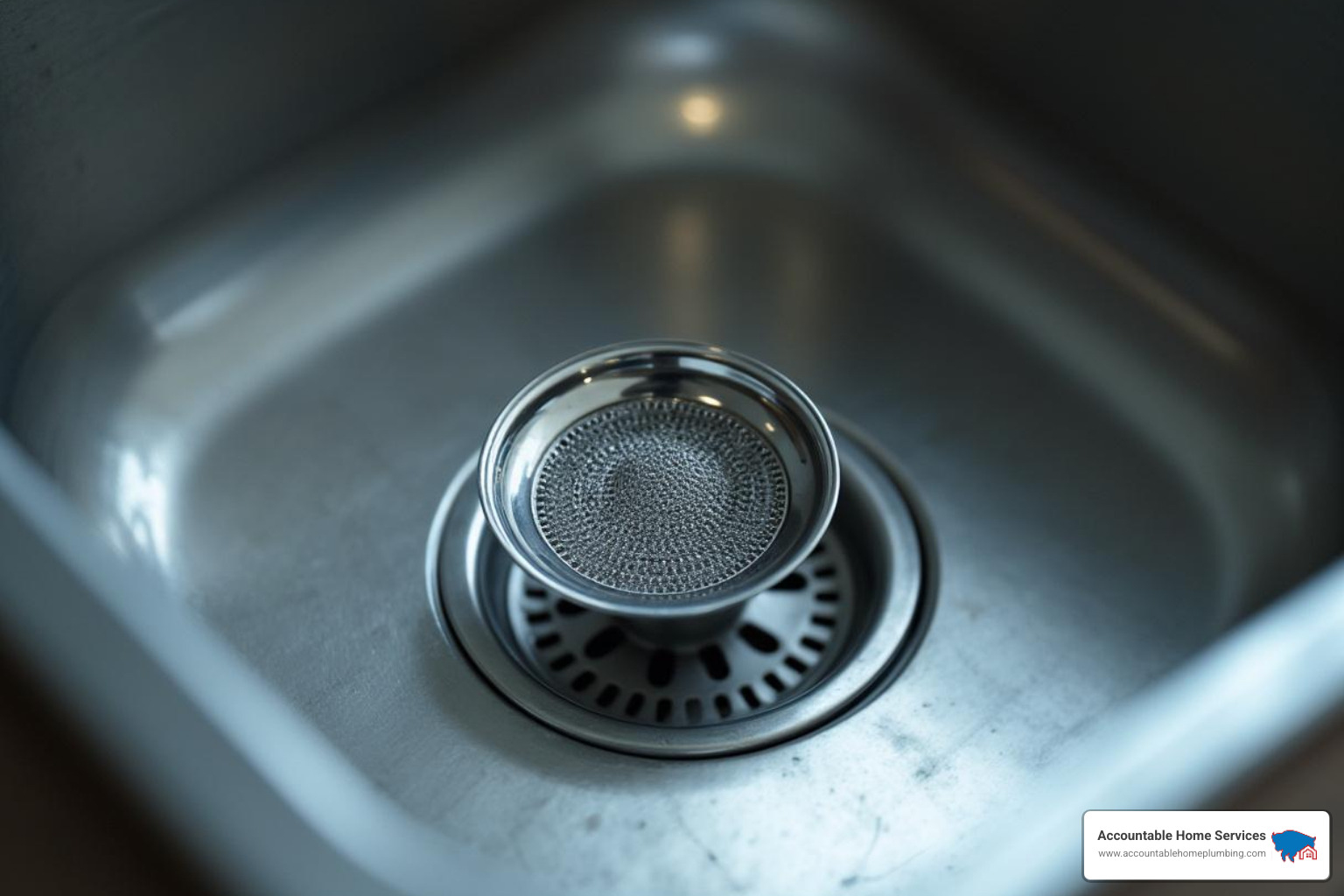
First, install a mesh drain strainer. This simple tool catches food particles before they enter your pipes. Empty it into the trash regularly.
Next, never pour grease, fats, and oils down the drain. As they cool, they solidify inside pipes, creating sticky traps for other debris. Pour cooled grease into a sealable container and throw it in the trash. As experts advise, always limit what you put in them.
While garbage disposals are helpful, they can't handle everything. Scrape plates into the trash before rinsing. When using the disposal, run a strong stream of cold water before, during, and for 30 seconds after. Cold water keeps grease solid so it can be flushed away.
Here are foods to never put down your garbage disposal:
- Bones
- Fibrous vegetables (celery, corn husks)
- Coffee grounds
- Fruit pits and seeds
- Fats, oils, and grease
- Pasta and rice (they expand with water)
- Eggshells
- Non-food items
In the Bathroom
Bathroom drains are primarily challenged by hair and soap scum, which combine to form stubborn clogs.
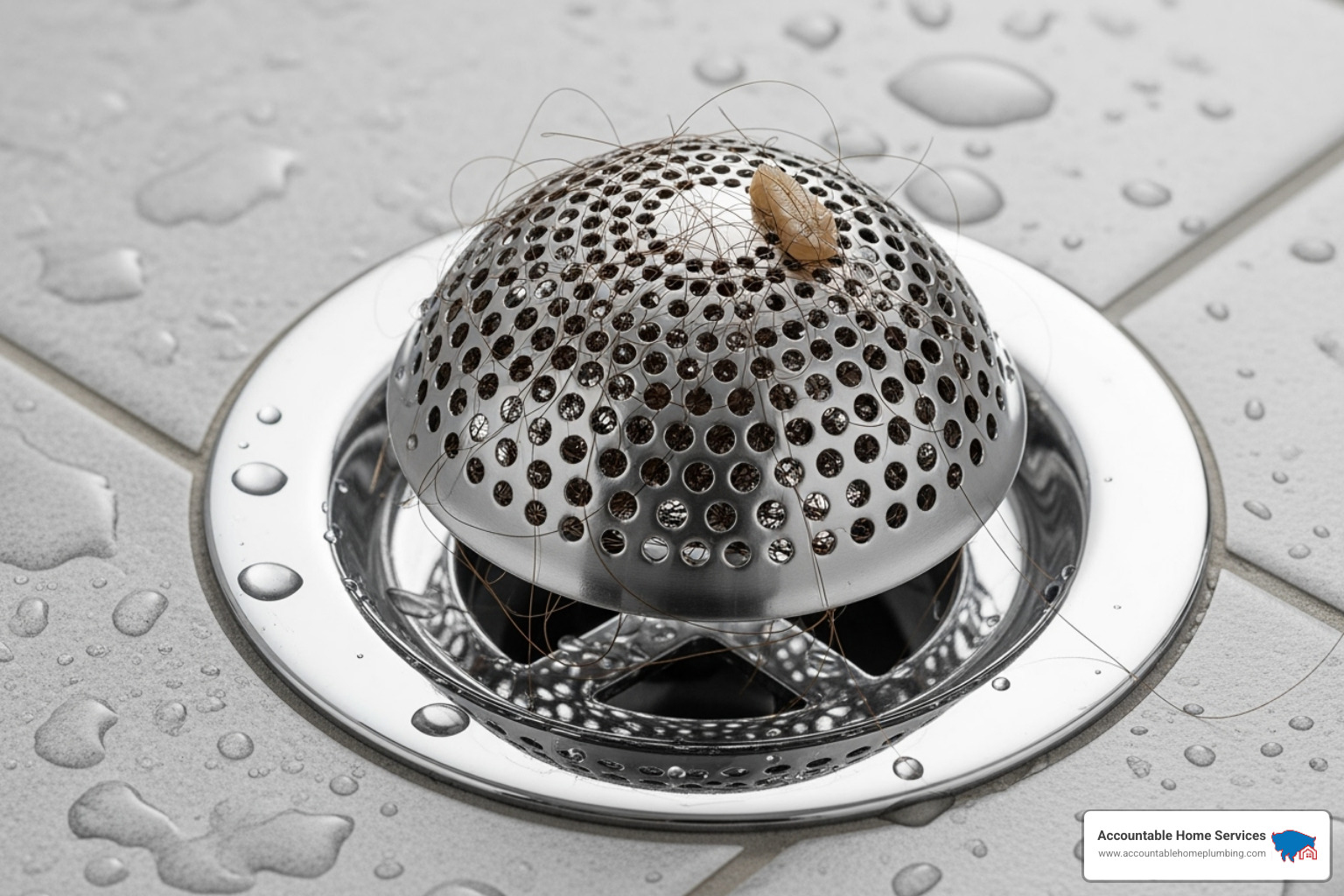
The best defense is a hair catcher or drain strainer. Clean it after every use—it's much easier than removing a deep clog later. Also, brush your hair before showering to remove loose strands.
Soap scum, toothpaste, and shaving cream also build up over time. Regularly flushing drains with hot water helps dissolve this residue.
Finally, only flush human waste and toilet paper. So-called "flushable" wipes, paper towels, and feminine hygiene products are a leading cause of major clogs. Always throw dental floss, cotton balls, and other waste in the trash.
A Simple Maintenance Schedule: How to Keep Drains Clean Regularly
Consistency is the key to how to keep drains clean. A simple routine prevents major problems. Here’s a maintenance schedule to keep your drains in top shape:
- Weekly: Pour a kettle of hot water down the kitchen sink to melt grease. For all drains, a hot water flush helps dissolve soap buildup.
- Monthly: For a deeper clean in bathroom sinks and tubs, pour 1/2 cup of baking soda down the drain, followed by 1 cup of white vinegar. Let it fizz for 15 minutes, then flush with hot water.
- Quarterly: Remove and clean your sink and tub drain stoppers. They accumulate a surprising amount of hair and grime. Soak them in a vinegar-water solution and scrub with a brush.
- Annually/Bi-Annually: Inspect and clean outdoor drains and gutters, especially before rainy seasons. For peace of mind, schedule a professional plumber to inspect your entire plumbing system every couple of years. We can spot issues early and perform services like hydro-jetting that go beyond DIY methods.
By following these simple tasks, you'll master how to keep drains clean. For more tips, explore our guide on Routine Drain Maintenance.
Your DIY Toolkit for Minor Clogs and Slow Drains
Even with great prevention, minor clogs can happen. Before calling a plumber, you can often solve the issue yourself with a few effective DIY solutions, saving time and money.
Natural Solutions: How to Keep Drains Clean Without Harsh Chemicals
We recommend natural solutions because they are safer for your pipes and the environment, and they use common household items.
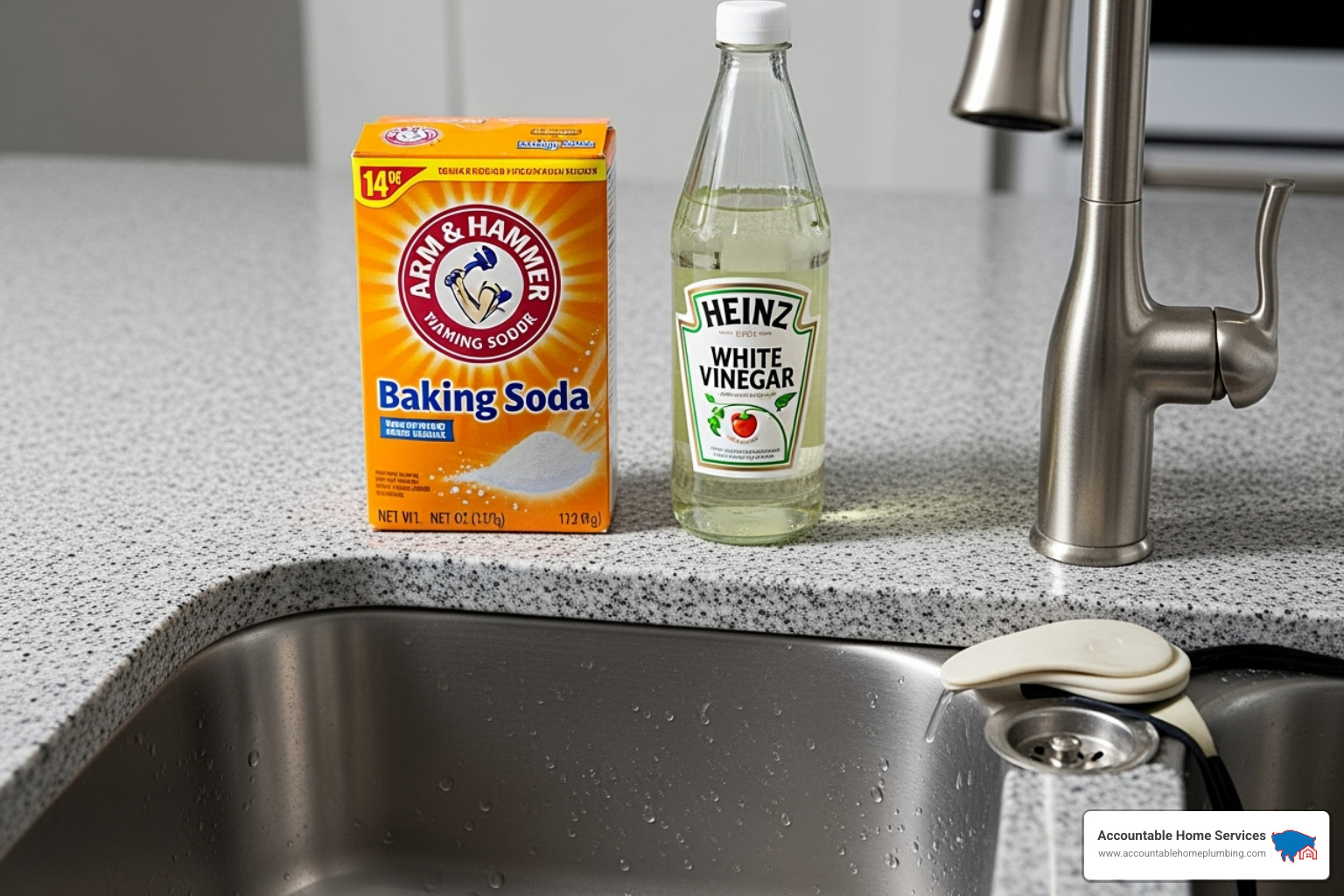
Baking Soda and Vinegar: This classic duo is great for minor clogs and deodorizing. The fizzing reaction helps loosen grime, grease, and soap scum.
- Pour a pot of hot (not boiling) water down the drain.
- Add 1/2 cup of baking soda.
- Follow with 1 cup of white vinegar and cover the drain.
- Let it sit for 15-30 minutes.
- Flush thoroughly with hot tap water.
For extra scrubbing power, you can add 1/4 cup of salt to the baking soda.
Hot Water and Dish Soap: This method works well on greasy kitchen clogs. Pour a few tablespoons of grease-cutting dish soap into the drain, followed by a kettle of hot tap water. Let it sit for 10 minutes to break down the grease, then flush with more hot water. These natural methods are your first line of defense in learning how to keep drains clean. Find more tips on our page about the Best Slow Drain Solution.
Basic Tools to the Rescue
Sometimes, you need a little mechanical help. These inexpensive tools are effective for many common clogs.
- Plunger: A must-have for every home. Ensure there's enough water to cover the plunger's cup to create a seal. Place it firmly over the drain and pump vigorously for 15-20 seconds before pulling it up sharply. For tubs, cover the overflow plate with a damp cloth to improve suction.
- Drain Snake (or Plumbing Auger): For deeper clogs, a drain snake can break up or pull out blockages. Feed the snake down the drain until you feel resistance, then rotate the handle to grab the clog. Pull it back out slowly. Use with care to avoid scratching pipes.
- Bent Wire Hanger: For simple hair clogs near the drain opening, a straightened wire coat hanger with a small hook on the end can be surprisingly effective.
- Cleaning the P-trap: The curved pipe under your sink (the P-trap) can be a source of clogs. Place a bucket underneath, use a wrench to loosen the nuts, and remove the trap to clean it out. Reattach it securely, but don't overtighten.
For more expert advice on using these tools, check out this step-by-step guide to cleaning and unclogging drains, according to a plumber.
What About Chemical Drain Cleaners?
We strongly advise against using liquid chemical drain cleaners. While they promise a quick fix, the harsh chemicals (like sodium hydroxide) pose significant risks:
- Pipe Damage: The corrosive action and intense heat generated can eat away at pipes, especially older metal ones, and can warp or crack PVC pipes.
- Septic System Harm: They kill the beneficial bacteria essential for your septic tank to function, leading to system failure.
- Safety and Environmental Risks: They produce toxic fumes, can cause severe skin and eye burns, and pollute water systems. If they fail to work, they leave hazardous chemicals in the drain, endangering you and any plumber you call.
Instead, consider enzymatic or bacterial drain cleaners. These products use beneficial bacteria to "eat" organic buildup like grease and hair. They work more slowly but are non-corrosive, biodegradable, and safe for all pipes and septic systems. They are an excellent choice for monthly maintenance to proactively keep drains clear.
When to Hang Up the Plunger and Call a Professional
While DIY methods are great, some drain problems signal a bigger issue that requires a professional. Ignoring these signs can turn a small problem into a costly plumbing disaster. Knowing when to call for help is as important as knowing how to keep drains clean.
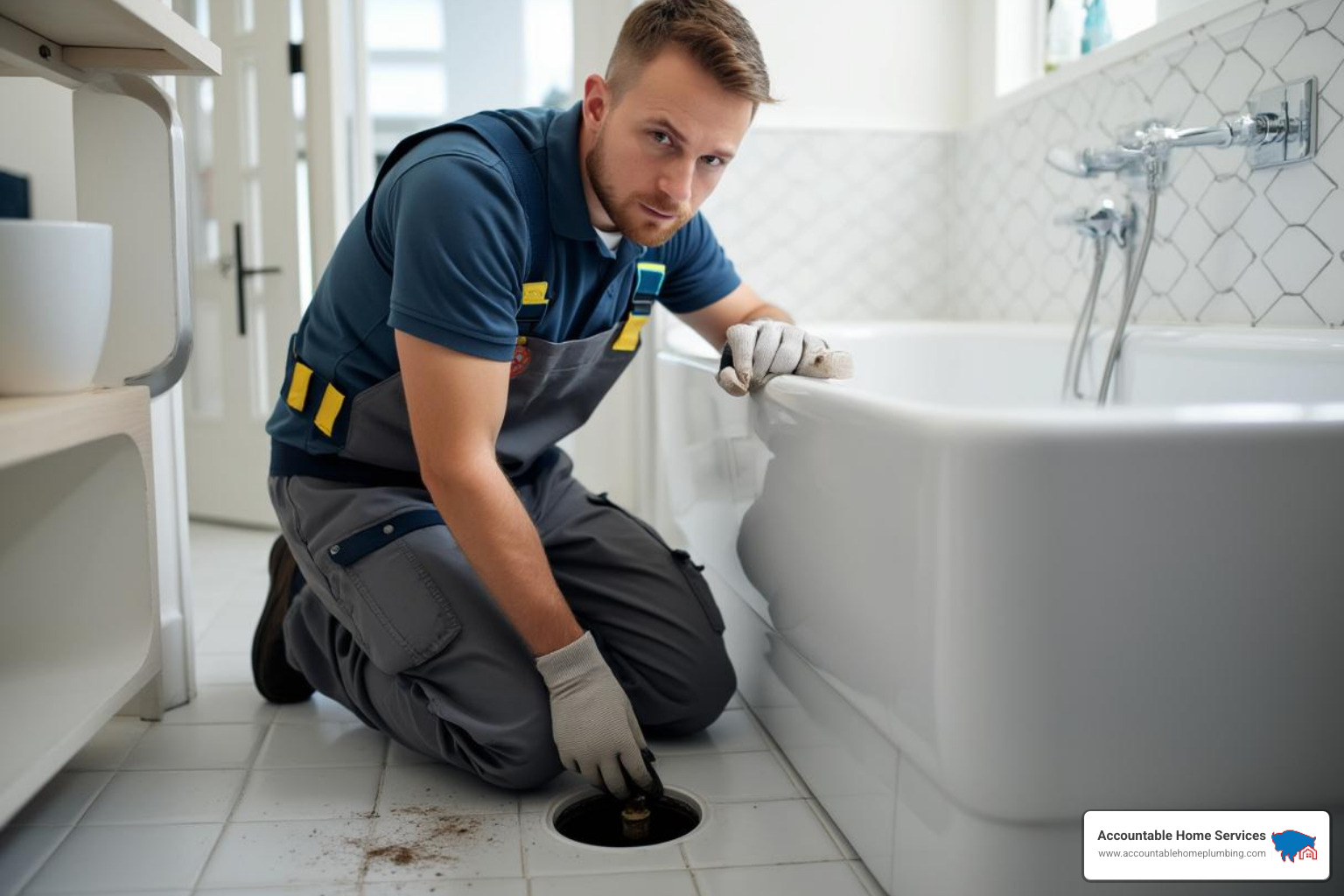
It's time to call a professional plumber if you notice any of these red flags:
- Recurring Clogs: If the same drain keeps backing up despite your efforts, the blockage is likely deep in the line where DIY tools can't reach.
- Multiple Drains Backing Up: When your toilet, shower, and sinks all drain slowly or back up simultaneously, it points to a main sewer line blockage that affects your entire home.
- Persistent Slow Drains: Drains that remain sluggish even after cleaning attempts indicate a significant buildup that requires professional equipment like a power auger or hydro-jetting.
- Foul Sewer Gas Odors: A persistent sewer smell from your drains could signal a dry P-trap, but it might also indicate a serious blockage or a break in your sewer line.
- Gurgling Sounds: Gurgling from your drains or toilet is the sound of trapped air trying to get past a blockage.
- Water Backing Up: If water from flushing a toilet or running the washing machine appears in your tub or sinks, your plumbing system is overwhelmed and needs immediate attention.
Attempting to clear severe clogs yourself can sometimes make things worse, potentially damaging pipes. At Accountable Home Plumbing, we provide Denver Metro area homeowners with expert solutions and upfront pricing with no hidden fees. When you see these warning signs, let the professionals take over.
Check out our Clogged Drain Cleaning Service to see how we can get your drains flowing freely again.
Frequently Asked Questions about Drain Maintenance
We talk to homeowners across the Denver Metro area daily, from Broomfield and Westminster to Arvada and Boulder. Here are answers to some of the most common questions we hear about how to keep drains clean.
Is it safe to pour boiling water down PVC pipes?
This is a critical question. While hot water helps dissolve grease, boiling water is risky for PVC (plastic) pipes. The extreme heat can cause PVC to soften, warp, or even melt, leading to leaks and costly repairs. If you have older metal pipes (copper or cast iron), boiling water is generally safe. However, since most modern homes use PVC, we recommend sticking to very hot tap water. It's effective enough for maintenance without risking damage to your pipes.
What is the black sludge in my sink and is it dangerous?
That gross black sludge is typically a harmless, albeit unpleasant, mix of soap scum, grease, hair, food particles, and bacteria. It thrives in damp, dark drains and is a common cause of odors and slow drainage. While usually not a direct health threat, it can create conditions for mold growth. The best way to remove it is with a hot water flush followed by the baking soda and vinegar method. If the problem persists or you see significant mold, it's time to call a professional for a thorough cleaning.
Why does my drain smell even after I've cleaned it?
It's frustrating when a bad smell lingers after cleaning. There are several potential culprits:
- A Dry P-Trap: The U-shaped pipe under your sink holds water to block sewer gas. If a sink isn't used often, this water can evaporate, letting odors in. Running the water for a minute usually solves this.
- Deep Clogs: Your cleaning might have only cleared a partial blockage. A deeper clog can still trap debris and cause odors.
- A Dirty Overflow Drain: The small hole near the top of your sink basin, the overflow, can collect grime and create smells. Clean it with a small brush and a baking soda solution.
- Sewer Line Issues: Persistent odors, especially with gurgling sounds or multiple slow drains, could indicate a major blockage or break in your main sewer line.
- Vent Stack Blockage: Your plumbing system's vent allows air to enter, helping water drain. If this vent is blocked (e.g., by leaves on your roof), it can cause sewer gases to be pulled back into your home.
If you've cleaned the drain and the smell remains, it's a sign of a more complex issue that requires a professional plumber to diagnose and resolve.
Conclusion
Mastering how to keep drains clean comes down to simple, consistent habits. Being mindful of what goes down your drains and performing regular maintenance saves you from frustrating clogs and expensive repairs. Your DIY toolkit, featuring natural solutions like baking soda and vinegar, can handle many minor issues safely.
However, it's crucial to avoid harsh chemical cleaners and to recognize the signs of a serious problem—like recurring clogs or backups in multiple drains. Knowing when to call a professional is key to preventing major damage.
At Accountable Home Plumbing, we are your trusted partners in keeping your home's plumbing healthy. We empower homeowners across the Denver Metro area with knowledge, and when you need us, we provide reliable service with upfront pricing and no hidden fees.
Don't let a drain problem disrupt your day. Be proactive, and for any persistent clogs or plumbing emergencies, remember we're here to help. Explore our expert services at https://www.accountablehomeplumbing.com/services.